
|
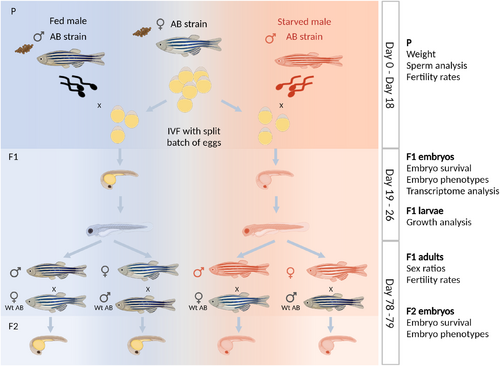
Fig. 1 A zebrafish model to study the intergenerational effects of paternal starvation. Experimental design for IVF using a split-clutch design: All males from the AB strain were weighed at the beginning of the experiment (Day 0) and then randomly split into fed and starved groups. Starved males were fully deprived of food whereas fed males were fed a standard diet of a mix of dry and live (artemia) food three times a day. All males were kept with an equal number of females for the duration of the experiment. After 18 days, males were weighed again, and ejaculates were collected. Eggs were collected from healthy wild-type AB non-experimental females and split into two equal halves for IVF. Sperm from one fed and one starved male, respectively, were used to fertilise one half of the clutch of eggs. The sperm collected was used to fertilise eggs from two different females. On day 19, embryos were collected at prim-5 stage (24 hpf) for transcriptome analyses. Larval length was measured on days 5 and 8 postfertilisation. Part of the F1 larvae was grown to adulthood. F1 males and females were crossed to wildtype AB fish and their offspring was obtained by natural spawning. The phenotypes of the F2 embryos were studied at 2 and 24 hpf. The timeline of the experimental setup and data collected is shown on the right side of the design. Created with BioRender.com.