
|
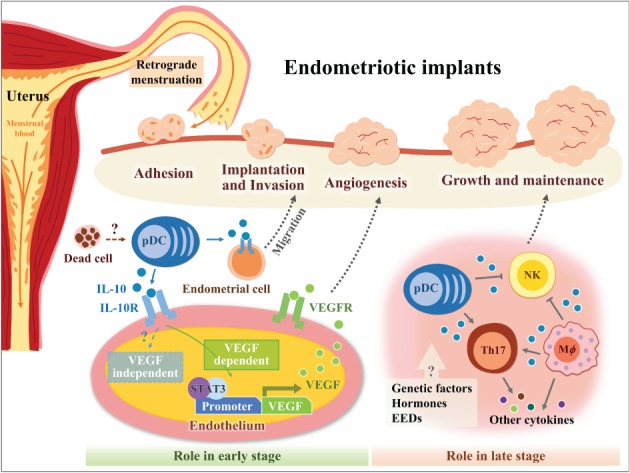
Figure 6
Schematic representation of the effect and immune cell sources of IL‐10 during the early and late stages of endometriosis. During the early implantation and invasion stages, lesion pDCs may secrete IL‐10 in response to unwanted and apoptotic cells. Local IL‐10 further promotes lesion growth by either suppressing anti‐ectopic fragment immunity or stimulating angiogenesis in VEGF‐dependent and ‐independent pathways. In addition, IL‐10—IL‐10R signalling may stimulate endometrial cell migration. The complex interaction among genetic factors, endogenous hormones, environmental endocrine disruptors (EEDs), and impaired immune surveillance leads to chronic inflammation. In the context of chronic inflammation in the peritoneal cavity, other immune cells, such as alternative activated macrophages and Th17 cells as well as endometrial cells (not shown here), can secrete IL‐10 and other mediators to further promote the growth and maintenance of ectopic implants.