
Figure 3
- ID
- ZDB-IMAGE-260730-25
- Publication
- Zhang et al., 2026 - CFTR and ClC-3 Transport Fluoride Differently and Cause Dental Fluorosis in Different Ways
- All Figures
- Figures for Zhang et al., 2026
|
Figure 3
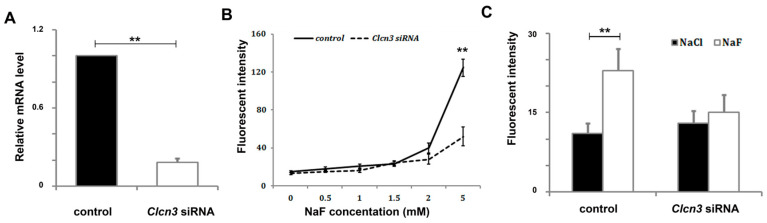
ClC-3 is necessary to prevent fluoride entrance. (A) Q-PCR results. Treatment with Clcn3-specific siRNA downregulated Clcn3 expression by 80% in mouse ameloblast LS8 cells. (B) Comparison of intracellular chloride. Compared with the control, intracellular chloride levels (labeled with MQAE dye) were significantly higher in both 2 mM and 5 mM NaF-treated control groups, whereas no increase was observed in the Clcn3 siRNA-transfected group. (C) Comparison of intracellular concentration of fluoride. The control group exhibited a significant increase in fluorescence after NaF treatment, whereas the Clcn3 siRNA group showed only a weak, non-significant rise in fluoride uptake. N = 3. **: p < 0.01.