IMAGE

Fig 4

ID
ZDB-IMAGE-251030-63
Source
Figures for Goering et al., 2025
Image
Figure Caption

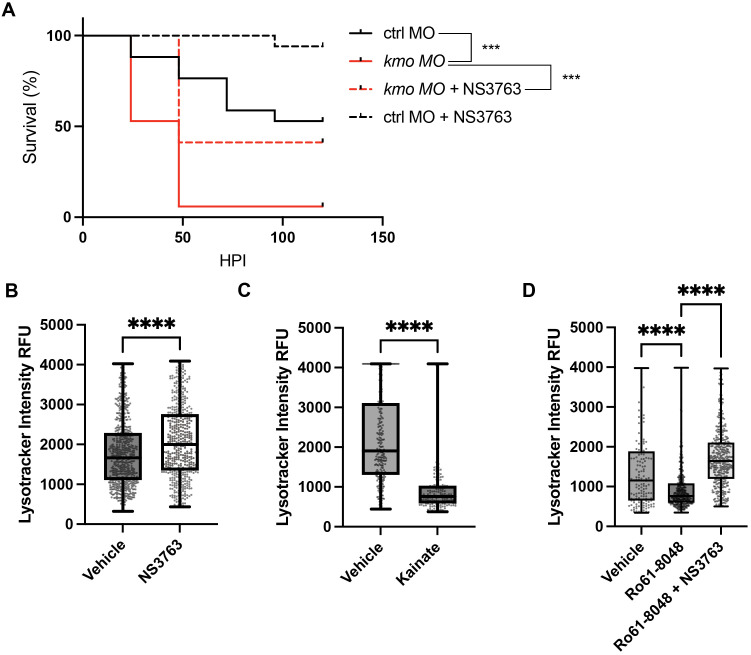
Fig 4 Kainate receptor (KAR) antagonism rescues the loss of endogenous 3-HK and promotes lysosomal acidification in infected macrophages.

(A) KAR antagonism with NS 3763 rescues the sensitivity to infection in kmo morphants. Kmo and control morphant larvae were infected with S. Typhimurium (215 + /- 134 CFU), treated with 75µM NS 3763 or DMSO control and monitored over time for survival. (N = 17 larvae/ group; **p < 0.01, ***p < 0.001, Log rank test). (B, C, D) Tg(mpeg1.1:mCherry) larvae were infected with S. Typhimurium-GFP and maximum Lysotracker staining was measured at 14 HPI using confocal microscopy. Lysotracker intensity was quantified from individual macrophages in the caudal hematopoietic tissue. (B) The KAR antagonist NS 3763 increases maximum Lysotracker staining in infected macrophage populations compared to vehicle (DMSO) control (Unpaired t-test. ****p < 0.0001). (C) The KAR agonist kainate decreases maximum Lysotracker staining in infected macrophages compared to vehicle (DMSO) control (Unpaired t-test. ****p < 0.0001). Values are individual macrophages imaged in the caudal hematopoietic tissue. All data points shown. (D) KAR antagonism with NS 3763 reverses the decrease in Lysotracker staining in infected macrophages following inhibition of endogenous 3-HK production with the Kmo inhibitor Ro61-8048. (One-way ANOVA followed by Tukey’s multiple comparisons. ****p < 0.0001). Values are individual macrophages from 8-14 biological replicates. All data points shown.

Acknowledgments
This image is the copyrighted work of the attributed author or publisher, and ZFIN has permission only to display this image to its users. Additional permissions should be obtained from the applicable author or publisher of the image. Full text @ PLoS Pathog.